Living in Tandem with the Seasons: Ayurvedic Wellness
As the seasons shift throughout the year, days begin to shorten, and with those shorter days, we may begin to notice changes within ourselves. Our bodies, diets, sleep patterns, energy levels, routines, and even the foods we crave can begin to shift. The opposite happens as winter gives way to spring and daylight slowly returns.
Nature is changing around us, and we are changing alongside it.
In my previous articles, Ayurveda: An Ancient Science of Living Well and 🌿 Dinacharya (Ayurvedic Daily Routine): Creating a Balanced, Mindful Day, I introduced Ayurveda as an ancient life science and a path to wellness through daily and seasonal practices.
Within Ayurveda, we also explore our Prakruti, or our underlying doshic constitution, and our Vikruti, our current state of balance or imbalance. While our Prakruti remains our foundation, our Vikruti can fluctuate with our environment, lifestyle, diet, stress, routines, and the seasons.
Ayurveda encourages us to notice these changes and make thoughtful adjustments to our day-to-day routines as the world around us changes.
From Summer to Autumn: Pitta Gives Way to Vata
As we begin the shift from summer into autumn, the differences between the qualities of these seasons become easier to recognize.
In Ayurveda, summer is commonly associated with Pitta, while autumn is associated with Vata.
The seasons may traditionally be described through qualities such as:
Summer, or Pitta season: hot, sharp, intense, and sometimes humid or dry depending on the climate.
Autumn, or Vata season: cool, light, dry, rough, and windy.
When these qualities become excessive, Ayurveda traditionally associates them with different signs of imbalance.
During hot summer weather, excess heat may coincide with experiences such as feeling overheated, irritable, inflamed, or depleted. As autumn arrives and the environment becomes cooler and drier, Vata-associated qualities may show themselves through dryness, feeling cold, restlessness, scattered energy, or difficulty settling down.
These experiences are not set in stone. Seasons vary by region, and each of us responds differently depending on our constitution, current state of balance, lifestyle, and environment.
Finding Balance Through Opposite Qualities
So, how might we respond to these changing seasonal qualities?
One of the beautifully simple ideas within Ayurveda is that opposite qualities can help create balance.
During the heat of summer, cooling foods such as watermelon, cucumber, and mint can feel refreshing. Water activities, lighter meals, cooling herbs, and plenty of hydration can also complement the intensity of the season.
As autumn arrives, warm and grounding qualities begin to take center stage. Warm soups, teas, steamed vegetables, stewed fruits, and cooked grains can offer a comforting contrast to the coolness and dryness outside.
Think warm oatmeal topped with stewed apples in the morning, a bowl of Zuppa Toscana later in the day, or a cup of chamomile tea in the evening.
Seasonal wellness can extend beyond the kitchen, too. Warm baths and showers, moisturizing the skin, grounding routines, consistent meal and sleep times, and quieter evenings can all bring a sense of warmth and steadiness to a season characterized by movement and change.
🌿 Mindful Morsel
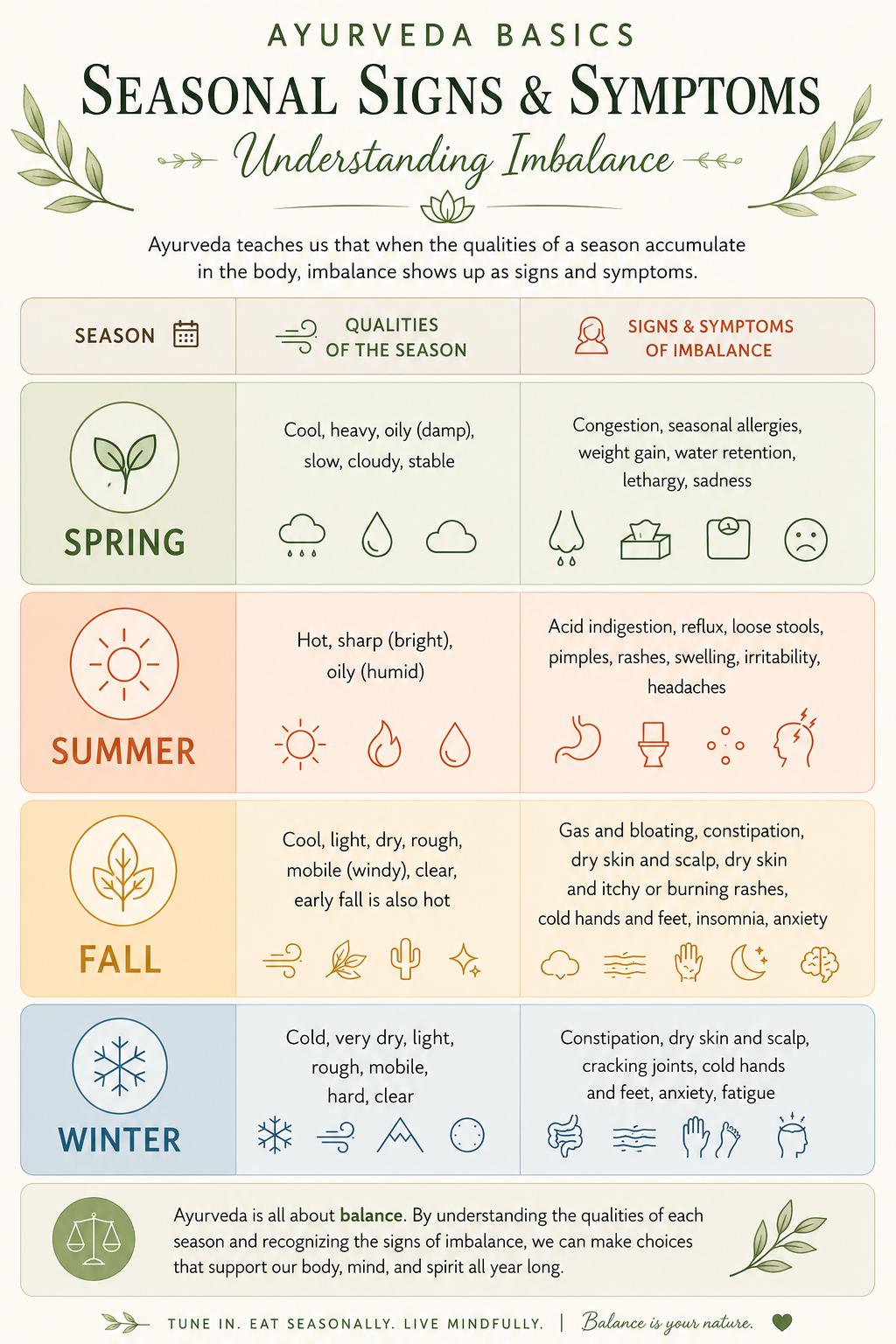
Ayurvedic seasonal qualities and common signs of imbalance to help you tune into changes in the body and mind throughout the year.
Rather than thinking of seasonal wellness as a strict list of foods and routines to follow, notice the qualities around you. If life feels cold, dry, hurried, or scattered, consider where you might introduce warmth, moisture, slowness, and steadiness.
When Autumn Doesn't Arrive on Schedule
Of course, seasons don't always follow the calendar.
If you live in Texas like I do, the transition from summer, or Pitta season, into autumn, or Vata season, can happen very slowly.
Late summer may still bring plenty of hot, sharp days, even as the air gradually becomes drier and the first hints of autumn begin to appear. Rather than suddenly switching from a summer routine to an autumn one because the calendar says September or October, I find it more helpful to pay attention to what is actually happening around me.
Maybe your skin and hair begin to feel a little less oily or noticeably drier, calling for a more moisturizing routine. Quieter evenings may start to beckon. Slower after-dinner walks with the dogs or friends begin to sound appealing. Coffee and tea shops may once again become cozy places to commune.
These small observations can tell us quite a bit about where we are within a seasonal transition.
My Own Seasonal Check-In
With my primary dosha, or Prakruti, being Vata, seasonal transitions give me an opportunity to take stock of how I am feeling and whether my Vikruti has shifted.
During summer, I may notice more Pitta qualities emerging. As autumn approaches and Vata season becomes more pronounced, my Vikruti may begin displaying more Vata qualities alongside my underlying Vata Prakruti.
At first, having a Vata Prakruti and a more Vata Vikruti might sound as though the two matching would mean greater balance. However, that isn't necessarily the case.
Vikruti reflects our current state, including qualities that may have accumulated in excess. In Ayurvedic tradition, excess Vata may be associated with qualities such as coldness, dryness, restlessness, scattered thinking, anxiety, or forgetfulness.
That is why seasonal awareness can be useful. Rather than simply asking, What is my dosha?, we can also ask, What qualities am I experiencing right now, and what might help bring them back toward balance?
Eating with the Seasons
Our relationship with food often shifts alongside the seasons, too.
As days shorten, routines change and different fruits and vegetables reach peak ripeness. Naturally, these foods begin making their way onto our tables.
Consider the transition from summer into autumn. During hot, intense summer months, lighter and cooler foods can feel refreshing. As temperatures begin to fall and the environment becomes drier, warmer foods, both in temperature and flavor, often become more appealing.
This doesn't mean completely changing the way you eat every few months. Instead, seasonal eating can be as simple as allowing a familiar meal to evolve with you.
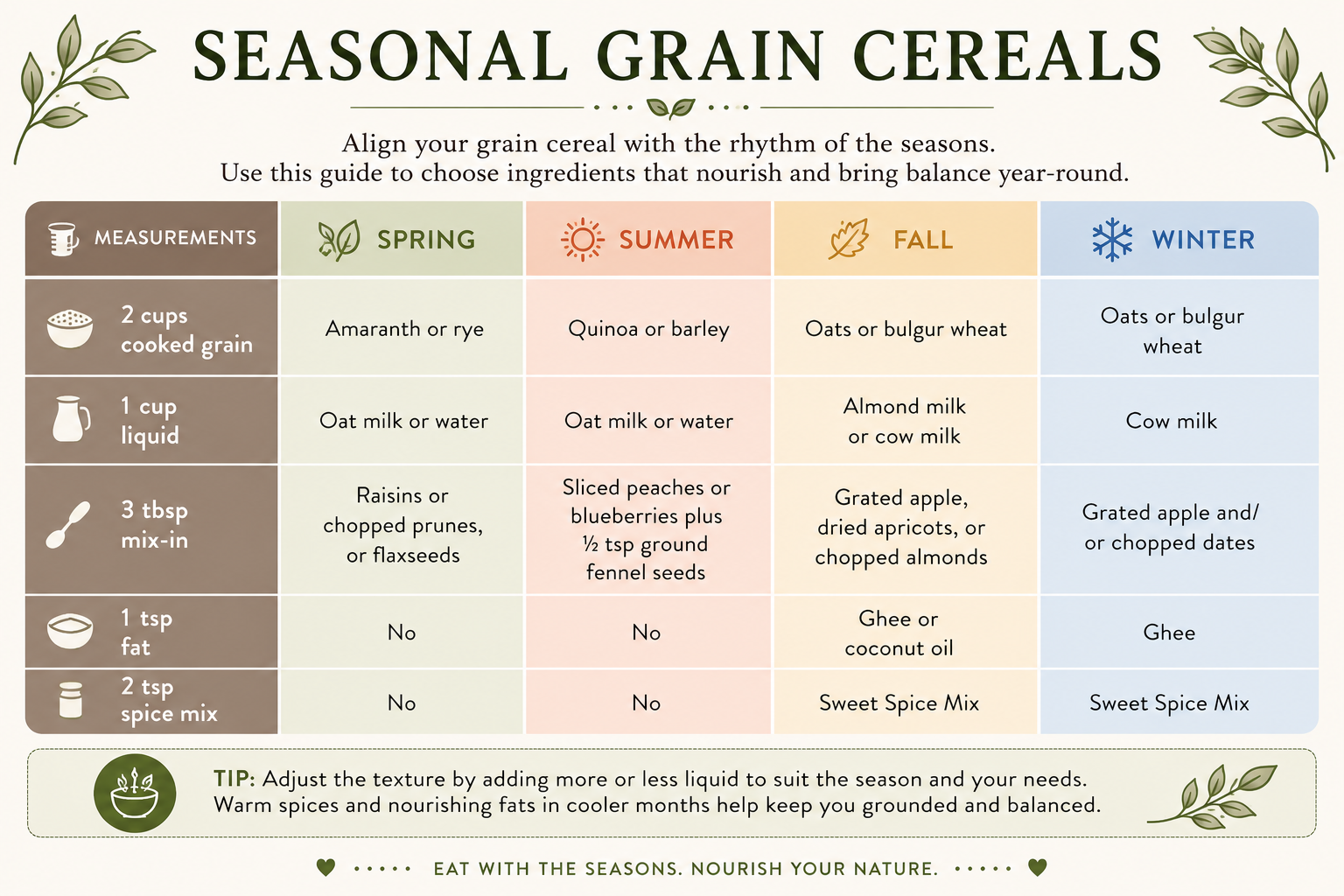
Seasonal breakfast suggestions to mix, match, and make your own. Choose from seasonal grains, fruits, spices, and nourishing additions based on your preferences and what feels good to you.
One Breakfast, Four Seasons
One of my favorite examples is a warm grain breakfast.
As shown in the image below, I've put together several seasonal breakfast combinations inspired by Ayurveda Cooking for Beginners by Laura Plumb. These are simply guides and can easily be adjusted according to your preferences, dietary needs, climate, and what is available to you.
My personal favorites include:
Summer: Quinoa cooked with a combination of water and oat milk, topped with banana, blueberries, raisins, or peaches; pecans; cinnamon; and a drizzle of honey or maple syrup.
Autumn: Oats or bulgur cooked with a combination of milk and water, topped with banana or cranberries, walnuts, cinnamon, and maple syrup or honey.
Winter: Oats or bulgur cooked with milk and water, increasing the proportion of milk for a richer bowl, topped with banana, cranberries, or apples; walnuts; cinnamon; vanilla; and honey or maple syrup.
Spring: Quinoa, since I haven't ventured into amaranth or rye yet, paired with banana or strawberries, raisins, pecans, cinnamon, and honey or maple syrup.
Alongside all of these combinations, I love adding chia seeds or ground flaxseed for an additional fiber boost. I also believe integrating mung beans into my cozy breakfast cereals may be in my future.
Note, the ingredients may change, but the basic breakfast remains familiar. That is one of the things I appreciate about seasonal eating. It doesn't necessarily require reinventing our diets. Sometimes it simply means making small adjustments to foods we already love.
Zoom Out and Take Stock
While we should listen to what our bodies and minds are telling us from day to day, it can also be helpful to look at the larger picture.
Sometimes we become so focused on what is directly in front of us that we forget to consider what has been changing around us.
Ayurveda offers another perspective: zoom out.
Take stock of your surroundings and ask yourself:
What season am I in?
What qualities are surrounding me right now?
What has changed in my routine, environment, food, sleep, or energy?
What qualities might I introduce to create a little more balance?
The answers don't need to result in an overhaul of your life. They might lead to something as simple as changing breakfast, reaching for a warm cup of tea, taking a slower evening walk, going to bed a little earlier, or preparing a pot of soup.
Seasonal wellness is less about perfectly following a calendar and more about noticing, adapting, and learning to live a little more in tandem with the world around us.
Continue Exploring Ayurveda
If you'd like to explore Ayurveda further, my article 🌿 Dinacharya (Ayurvedic Daily Routine): Creating a Balanced, Mindful Day includes additional information about adjusting daily routines according to your dosha.
Banyan Botanicals also offers more detailed routines that may be helpful when exploring how daily practices can shift alongside your constitution and current state of balance:
Ayurveda doesn't ask us to control the seasons. It invites us to notice them, notice ourselves within them, and make thoughtful adjustments along the way.
Perhaps living in tandem with the seasons begins simply by paying attention.
