🌿 Dinacharya (Ayurvedic Daily Routine): Creating a Balanced, Mindful Day
Most people can agree that both body and mind feel better when life follows a consistent rhythm. We eat better, sleep more deeply, have more energy, and feel more grounded. What many don’t realize is that this intuitive sense of routine is actually a foundational principle of Ayurveda — meaning you may already be closer to an Ayurvedic lifestyle than you think.
In Ayurveda, the daily routine is known as dinacharya, which refers to aligning the body and mind with nature’s natural rhythms. Traditionally, dinacharya includes a wide range of self-care practices such as personal hygiene (brushing teeth, tongue scraping, dry brushing, oil massage), movement (yoga), spiritual practices (meditation, breathwork, chanting), mindful eating, and restorative sleep (1)(2)(3).
🌿 Mindful Morsel
Your body thrives on rhythm. When you eat, sleep, and move consistently, you support digestion, regulate your nervous system, and create steady, sustainable energy throughout the day. From an anti-inflammatory perspective, routine helps reduce stress on the body, allowing it to function more efficiently and stay in balance. Even small shifts toward consistency can have a meaningful impact on how you feel day to day.
🌿 Understanding the Ayurvedic Daily Rhythm
Ayurveda divides the 24-hour day into segments based on the three doshas: Vata, Pitta, and Kapha. Each time period carries distinct qualities, and certain activities are best suited to each phase (1).
Interestingly, a typical modern schedule already aligns fairly closely with these rhythms. Let’s take a look at how an average day fits into an Ayurvedic framework:
Wake between 6:00 and 7:00 a.m.
Eat breakfast between 7:00 and 8:00 a.m.
Begin your workday around 8:00 a.m.
Exercise before lunch
Eat your main meal between 10:00 a.m. and 2:00 p.m.
Take a short walk after lunch
Continue focused or creative work through the afternoon
Eat dinner between 6:00 and 7:00 p.m.
Wind down between 7:00 and 10:00 p.m.
Go to bed by 10:00 p.m.
Even weekends, though more flexible, tend to follow a similar rhythm.
Routine is truly the backbone of a well-lived life. It provides structure, reduces decision fatigue, and supports both mental and physical stability. Without it, we may feel scattered, anxious, or out of sync — all of which can impact overall health. By following dinacharya, we create a steady foundation for balance and wellbeing (4).
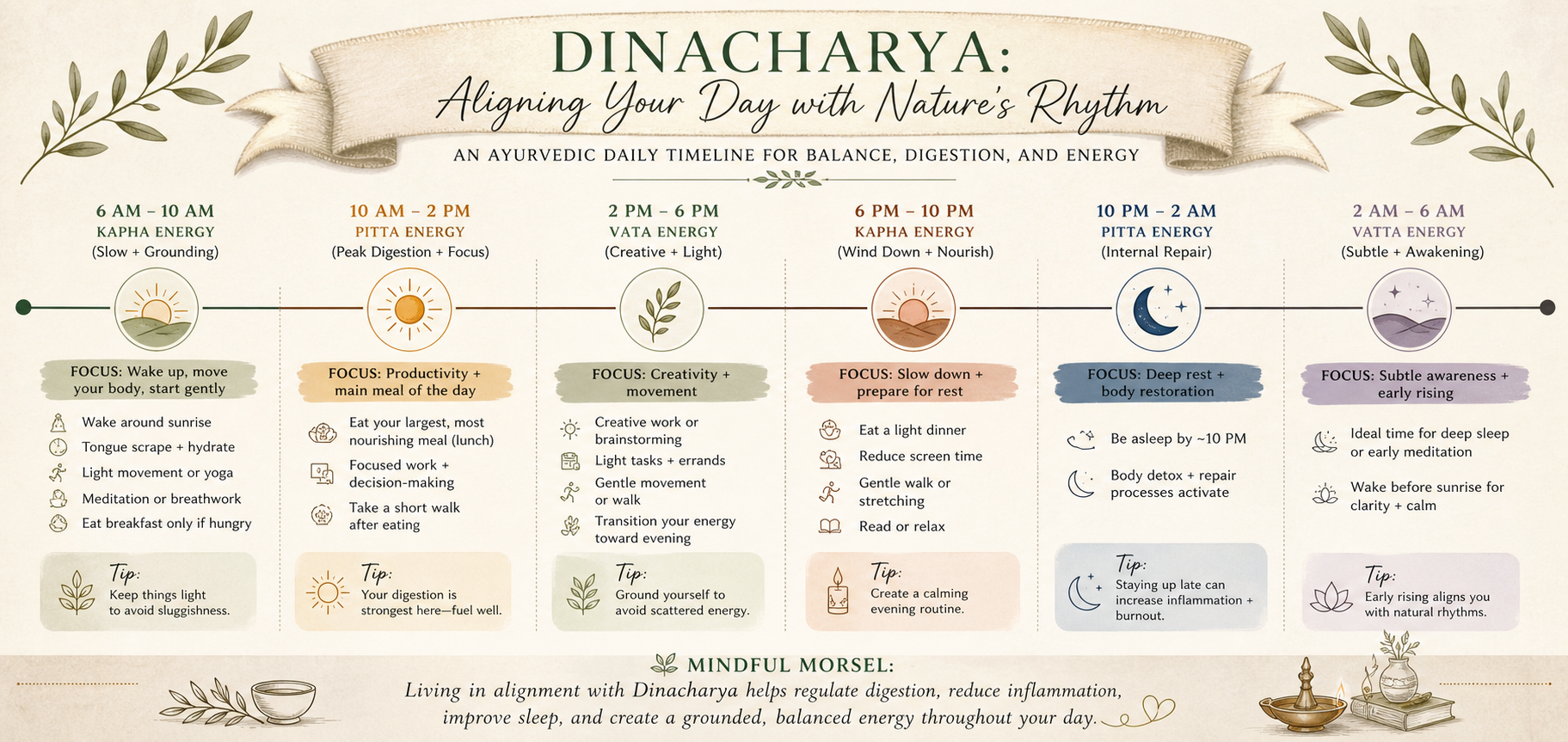
🌿 Creating a Routine That Works for You
So how do you build a routine that actually supports your unique life?
A great starting point is understanding your dosha — both your prakruti (natural constitution) and vikruti (current imbalance). In my blog post, Ayurveda: An Ancient Science of Living Well, I share several dosha quizzes to help guide you.
Once you understand your constitution:
Reflect on what your “best day” looks like
Identify habits that support your energy, digestion, and mood
Build your routine around those patterns
Adjust based on your current imbalances
Resources like Banyan Botanicals offer helpful guides for creating dosha-specific routines, which can be a great place to begin (2).
🌿 Why Consistency Matters
Consistency in your daily routine, especially around meals and sleep, has a powerful impact on the body.
Your body learns when to expect food and begins preparing in advance by releasing digestive enzymes and increasing circulation to support digestion. When meals are skipped or delayed, this natural rhythm is disrupted, which can lead to:
bloating
gas
fatigue
poor nutrient absorption
The same principle applies to sleep. When you go to bed at a consistent time, your body naturally prepares for rest. But when that rhythm is disrupted — like staying up late on weekends — it can trigger a “second wind,” often associated with Vata energy, making it harder to fall asleep (1)(5).
🌿 Mindful Eating as a Daily Practice
Beyond when you eat, Ayurveda also emphasizes how you eat.
Eating should be a mindful, intentional experience — not something done while distracted or rushed. While social meals have their place, everyday nourishment is best enjoyed in a calm and peaceful environment.
Try to:
Eat at a table rather than on the go
Minimize distractions like phones or television
Avoid eating while working
Create a calm, quiet space for meals
When we eat mindfully, digestion improves, energy stabilizes, and the body is better able to absorb nutrients (3).
🌿 Bringing Mindfulness Into Cooking
Cooking itself can become a grounding and enjoyable ritual. Simple practices to enhance mindfulness in the kitchen include:
Chanting or using mantra
Vata: “Ram” or “Hoom”
Pitta: “Aum,” “Aim,” “Shrim,” or “Sham”
Kapha: “Hoom,” “Aum,” “Aym”
Inviting friends or loved ones to cook with you
Turning your phone on silent to stay present (1)
These small shifts can transform cooking from a task into a nourishing experience.
🌿 Seasonal Awareness and Adaptation
As the seasons change, so should your routine.
Your vikruti naturally shifts with environmental changes such as temperature, daylight, and humidity. This affects your energy, digestion, and overall balance. Adjusting your routine and diet seasonally helps maintain equilibrium throughout the year (3).
For more guidance, seasonal eating resources like Joyful Belly can provide additional support (5).
🌿 Final Thoughts
Dinacharya is not about perfection — it’s about creating gentle structure and rhythm in your life.
By aligning your daily habits with natural cycles, you can support better digestion, improved sleep, and a greater sense of calm and clarity. This post is just the beginning, and we will continue exploring this topic more deeply — including doshas, seasonal shifts, and personalized routines.
📚 References
Ayurveda Beginner’s Guide: Essential Ayurvedic Principles & Practices to Balance & Heal Naturally by Susan Weis-Bohlen
The Everyday Ayurveda Cookbook: A Seasonal Guide to Eating and Living by Kate O’Donnell with Cara Brostrom
