The Power of Hydration: Why Water Matters More Than You Think
Hydration is one of the most essential, yet often overlooked, foundations of health. On average, a person can only survive about three days without water, though this can vary depending on factors like climate, activity level, and overall health (8). That is significantly shorter than how long the human body can go without food, which highlights just how vital hydration truly is.
Hydration is one of the simplest ways I support my energy, digestion, and overall wellness day to day.
But hydration does not have to feel like a chore. It can be refreshing, flavorful, and even nourishing when we think beyond just a plain glass of water.
What Counts as Hydration?
Hydration is not limited to water alone. Many foods naturally contain high amounts of water and can contribute to your daily intake.
Water-rich foods include fruits and vegetables such as:
Watermelon
Cucumbers
Cantaloupe
Strawberries
Cabbage
Squash (1)
Many of these foods also support an anti-inflammatory lifestyle by delivering hydration alongside vitamins, minerals, and antioxidants that help the body function optimally.
You can also elevate your hydration experience by infusing water with:
Fresh berries
Lemon or lime slices
Herbs like mint
This makes hydration feel less like a task and more like a ritual. I often find that when water feels more enjoyable, I naturally drink more of it throughout the day.
How Much Water Do You Actually Need?
Hydration needs vary based on several factors, including:
Age
Activity level
Climate
Diet
Weight
General guidance suggests that adults consume about 92 to 124 ounces of fluids per day, including both beverages and water-rich foods (1).
That said, hydration is not one-size-fits-all. It is always a good idea to talk with your primary care doctor or a nutritionist to find what works best for your body. After speaking with my own nutritionist, she recommends 64 to 72 ounces of pure water daily for my needs.
If you are:
Exercising intensely
Working outdoors
Sweating frequently
You may also need to replenish electrolytes, not just water (7). I have noticed on more active days, I naturally crave more fluids, which is often a helpful signal from the body.
Why Hydration Is So Important
The human body is made up of approximately 50–65% water, which supports nearly every system in the body (1).
Hydration helps your body:
💧 Regulate Body Functions
Produces sweat to cool the body
Supports saliva, tears, and joint lubrication (1)
🧠 Support Brain Function
Improves focus and mental clarity
Helps regulate mood and energy levels (3)
🍽 Aid Digestion
Helps break down food
Supports nutrient absorption
Assists in removing waste through urine and bowel movements (1)
Hydration also plays a key role in fiber digestion. Without enough water, fiber cannot properly move through the digestive system, which can lead to discomfort or constipation. I have found that when I focus on both fiber and hydration together, digestion feels much more balanced.
If you are increasing your fiber intake, pairing it with proper hydration is essential. You can explore more in my article on anti-inflammatory fiber foods here:
👉 https://www.mmmindfulmorsels.com/blog/anti-inflammatory-fiber-foods-why-fiber-matters-amp-how-to-use-this-chart
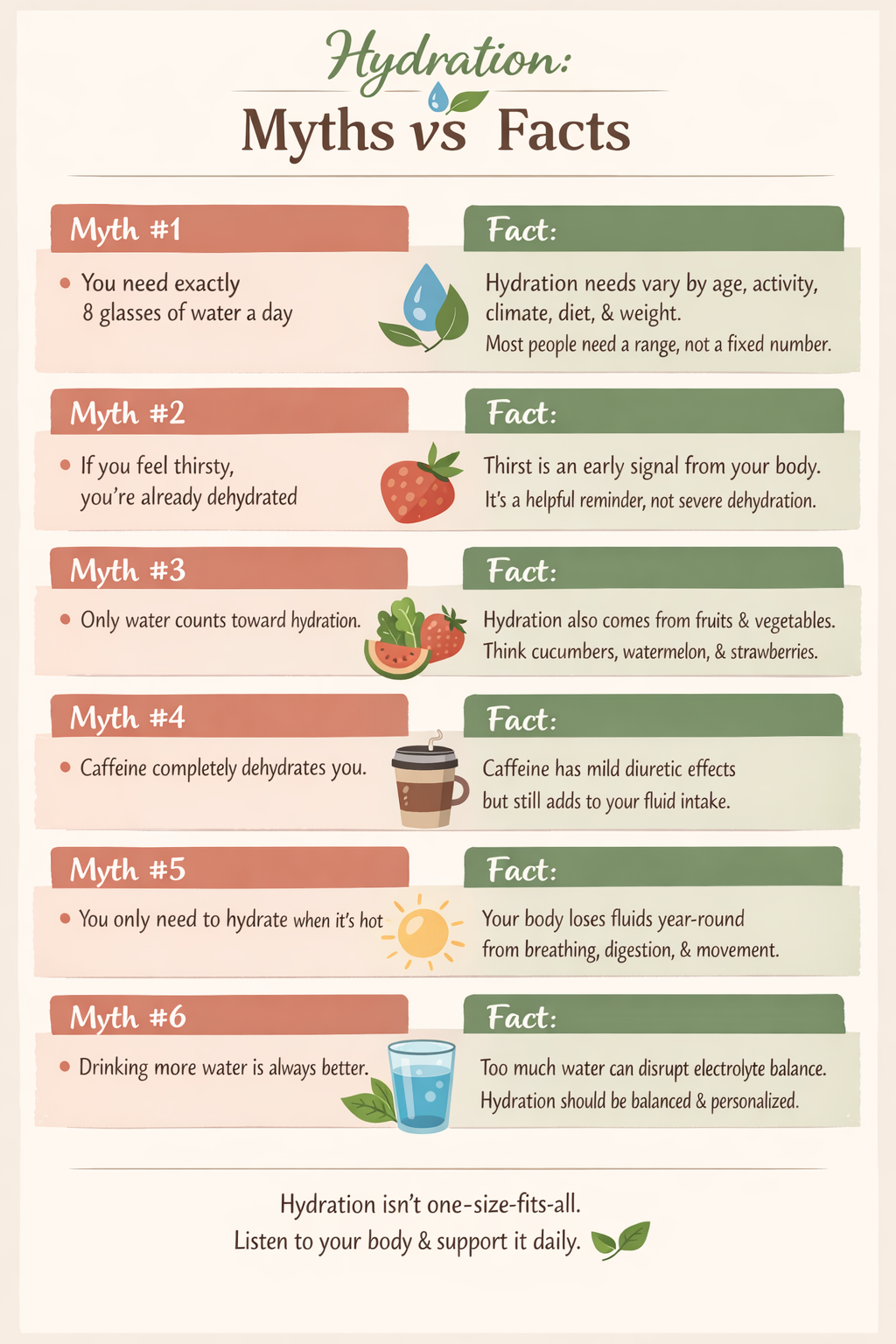
Infographic describing six myths of hydration myths versus facts.
🥗 Hydrating Recipes to Support Your Routine
Hydration can also come from meals you already love. Building hydration into your food is one of the easiest and most sustainable ways to support your body throughout the day.
If you are looking for something warm and nourishing, my Tuscan-inspired Zuppa (a brothy, nutrient-rich soup that supports hydration and digestion) is a great place to start:
👉 https://www.mmmindfulmorsels.com/tuscan-inspired-zuppa
This is one of my favorite meals when I want something cozy that still supports how I feel afterward.
For a fresh and balanced option, my steak and peach salad with hydrating fruit and leafy greens delivers both hydration and anti-inflammatory benefits:
👉 https://www.mmmindfulmorsels.com/steak-and-peach-salad
This is a go-to for warmer days when lighter meals feel more appealing.
And if you are in the mood for something cozy and blended, my pumpkin pie smoothie with a hydrating base and warming spices is a delicious way to support fluid intake while nourishing your body:
👉 https://www.mmmindfulmorsels.com/pumpkin-pie-smoothie
I love this one during cooler seasons when I still want something hydrating but a little more comforting.
❤️ Promote Overall Health
May support reduction in headaches and overall wellbeing (5)
Supports healthy blood pressure
Can aid in weight management (6)
May reduce the risk of kidney stones (4)
Signs You May Not Be Hydrated Enough
Your body will often give you signals when hydration is low. Common signs include:
Headaches or migraines
Dark-colored urine
Fatigue or sluggishness
Brain fog, confusion, or dizziness in more extreme cases (3, 5)
It is important to note that thirst is an early sign of dehydration, and as we age, our sense of thirst decreases (2). This is something I try to stay mindful of, especially on busy days when it is easy to forget to drink water.
What to Limit for Better Hydration
Some beverages can work against your hydration goals:
Sugary drinks like soda and juice (1)
Excess caffeine (which can have mild diuretic effects)
Alcohol
I have found that being more aware of these throughout the day naturally helps me make more balanced choices.
Simple Ways to Stay Hydrated Daily
Building hydration into your routine does not have to be complicated. Try:
Drinking a glass of water (8–16 oz) when you wake up
Carrying a reusable water bottle throughout the day
Drinking water with and between meals
Incorporating water-rich foods into your meals
Listening to your body and drinking when thirsty (1)
Your body is constantly losing fluids through breathing, sweating, and digestion, so replenishing throughout the day is key (1). Small habits really do add up over time.
🌿 Mindful Morsel
Hydration is more than drinking water. It is deeply connected to how your body reduces stress, supports digestion, and manages inflammation.
When your body is properly hydrated, it is better equipped to regulate temperature, circulate nutrients, and remove waste efficiently. Many hydrating foods, like fruits and vegetables, also carry anti-inflammatory compounds that support long-term wellness.
Even small habits, like adding lemon to your water or pairing fiber-rich meals with hydration, can create a meaningful ripple effect in how you feel day to day.
References
(1) Water: How much should you drink every day? Mayo Clinic.
https://www.mayoclinic.org/healthy-lifestyle/nutrition-and-healthy-eating/in-depth/water/art-20044256
(2) Parkinson E, et al. Low-intake dehydration prevalence in non-hospitalized older adults. Clinical Nutrition. 2023.
https://doi.org/10.1016/j.clnu.2023.06.010
(3) Dube A, et al. Effects of hypohydration on cognitive performance. African Health Sciences. 2022.
https://doi.org/10.4314/ahs.v22i1.45
(4) Liu Y, et al. Hydration and kidney stone-related behaviors. Appetite. 2025.
https://doi.org/10.1016/j.appet.2024.107747
(5) Hakam N, et al. Outcomes in randomized clinical trials testing changes in daily water intake. JAMA Network Open. 2024.
https://doi.org/10.1001/jamanetworkopen.2024.47621
(6) Chen QY, et al. Water intake and adiposity outcomes. Nutrients. 2024.
https://doi.org/10.3390/nu16070963
(7) Nutrition and athletic performance. Medicine & Science in Sports & Exercise. 2016.
https://doi.org/10.1249/MSS.0000000000000852
(8) Centers for Disease Control and Prevention. Water and Nutrition.
https://www.cdc.gov/disasters/extremeheat/water.html
