Olive Oil in Mediterranean and Ayurvedic Traditions
One of the reasons olive oil fascinates me is that it has stood the test of time across multiple cultures and healing traditions.
In Mediterranean countries, olive oil has long been considered a cornerstone of daily life. It is used in everything from simple salads and roasted vegetables to soups, breads, and family meals shared around the table. The Mediterranean diet consistently ranks among the healthiest dietary patterns in the world, and olive oil is one of its most celebrated ingredients.
While olive oil is not traditionally one of the primary fats used in Ayurveda, its qualities align well with many Ayurvedic principles. Ayurveda teaches that healthy fats are important for lubrication, nourishment, and maintaining balance within the body. Olive oil is generally considered warming, grounding, and nourishing, making it particularly supportive for individuals with Vata constitutions or those experiencing dryness.
Both traditions share a common philosophy: food is more than fuel. It is nourishment that supports the body, mind, and overall well-being.
How to Choose a Quality Olive Oil
Not all olive oils are created equal. Learning how to read a label can help you select a fresher, higher-quality product.
What to Look for on the Bottle
Single Region or Single Origin
Whenever possible, choose an olive oil sourced from a single region within a country or country. This often provides greater transparency and consistency in quality than oils blended from multiple regions.
Harvest or Bottling Date
Freshness matters. Olive oil is best enjoyed within one to two years of harvest, with peak flavor and nutritional benefits occurring during the first year.
Extra Virgin Olive Oil (EVOO)
Extra virgin olive oil is the least processed grade of olive oil and retains the highest levels of beneficial antioxidants and polyphenols.
Cold Pressed
Cold-pressed olive oil is extracted without excessive heat, helping preserve both flavor and nutritional value.
Dark Glass Bottles
Dark bottles help protect olive oil from light exposure, which can degrade quality over time.
What Should Good Olive Oil Taste Like?
Fresh olive oil should taste vibrant and alive. Depending on the variety, flavors may range from grassy and herbaceous to fruity and peppery.
One characteristic often associated with high-quality extra virgin olive oil is a slight peppery sensation at the back of the throat. This peppery finish is linked to the presence of beneficial polyphenols, including oleocanthal.
If an olive oil tastes flat, stale, waxy, or has little flavor at all, it may be old or improperly stored.
Understanding Olive Oil Grades
You may notice several different olive oil grades while shopping.
Extra Virgin Olive Oil (EVOO)
The highest quality grade. Best used for dressings, dipping, finishing dishes, and everyday cooking at moderate temperatures.
Virgin Olive Oil
Slightly more processed than EVOO but still retains many beneficial properties.
Pure Olive Oil
A blend of refined olive oil and virgin olive oil. Milder in flavor and often used for cooking.
Light Olive Oil
Despite the name, this does not contain fewer calories. The term refers to a lighter flavor and color due to additional processing.
For most home cooks, extra virgin olive oil is the best all-around choice.
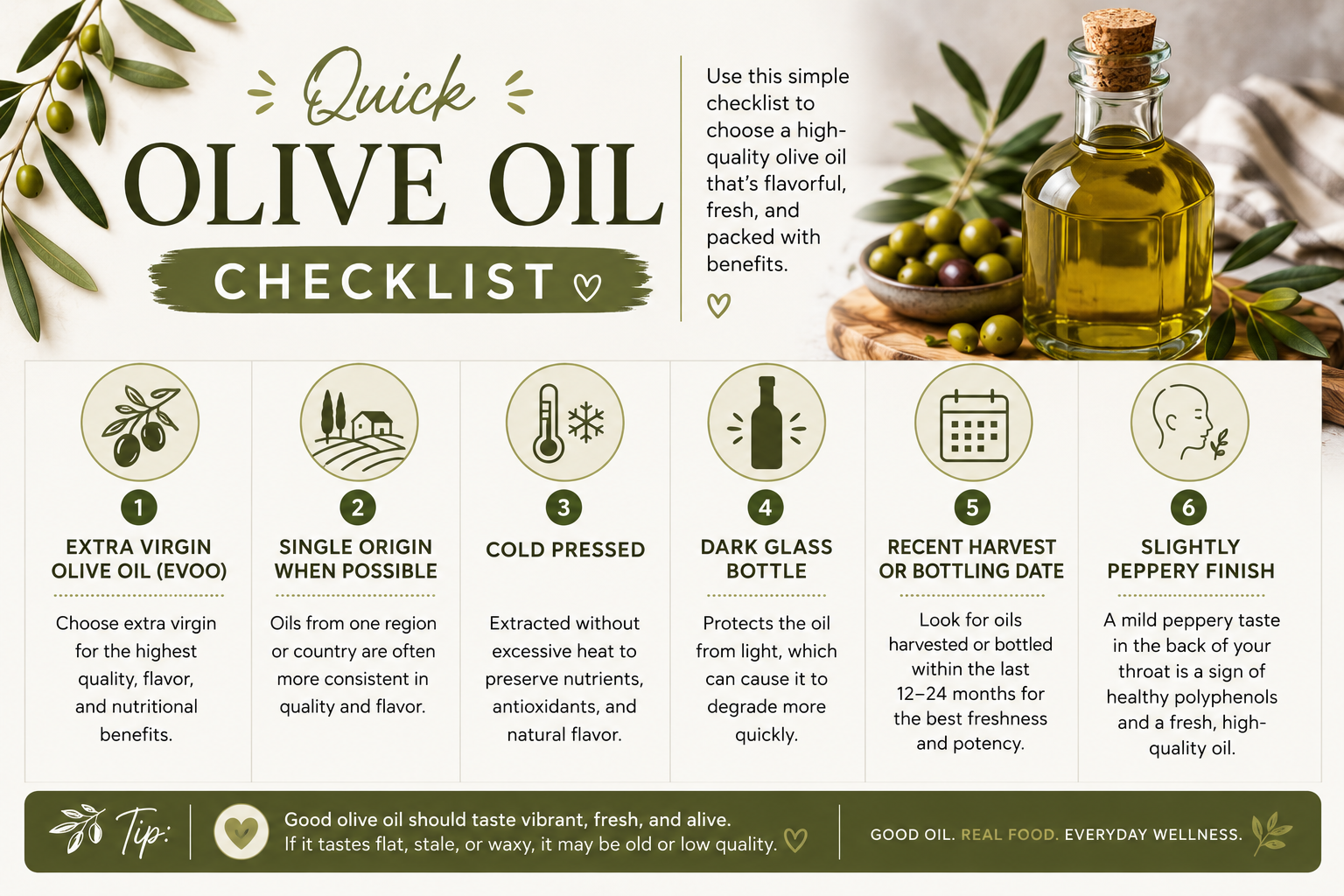
Save this infographic for a quick reminder while choosing an olive oil during grocery shopping.
Cooking with Olive Oil: Understanding Smoke Points
One common concern about olive oil is its smoke point.
The smoke point is the temperature at which an oil begins to break down and produce smoke. While olive oil has a lower smoke point than some refined oils, research suggests that high-quality extra virgin olive oil remains relatively stable during many common cooking methods.
Extra virgin olive oil generally performs well for:
Sautéing vegetables
Roasting vegetables
Baking
Light pan cooking
Salad dressings
Dipping and finishing dishes
For very high-heat cooking, oils such as avocado oil may be a better choice due to their higher smoke points.
Unique Ways to Use Olive Oil
Olive oil is incredibly versatile and can be used in more ways than many people realize.
Substitute olive oil for vegetable or canola oil in baked goods.
Drizzle over roasted vegetables before serving.
Blend into homemade salad dressings and marinades.
Use as a finishing oil for soups, grain bowls, and roasted meats.
Some people enjoy a spoonful of extra virgin olive oil daily as part of a Mediterranean-style eating pattern.
Combine with sugar or salt to create a simple homemade body scrub.
Use as an occasional moisturizing hair or scalp treatment.
Olive Oils I've Personally Enjoyed
During the olive oil tasting at my yoga retreat, we sampled several oils from different regions around the world. While everyone's preferences were slightly different, these were among our favorites (This page contains affiliate links. As an Amazon Associate, I earn from qualifying purchases — at no extra cost to you.):
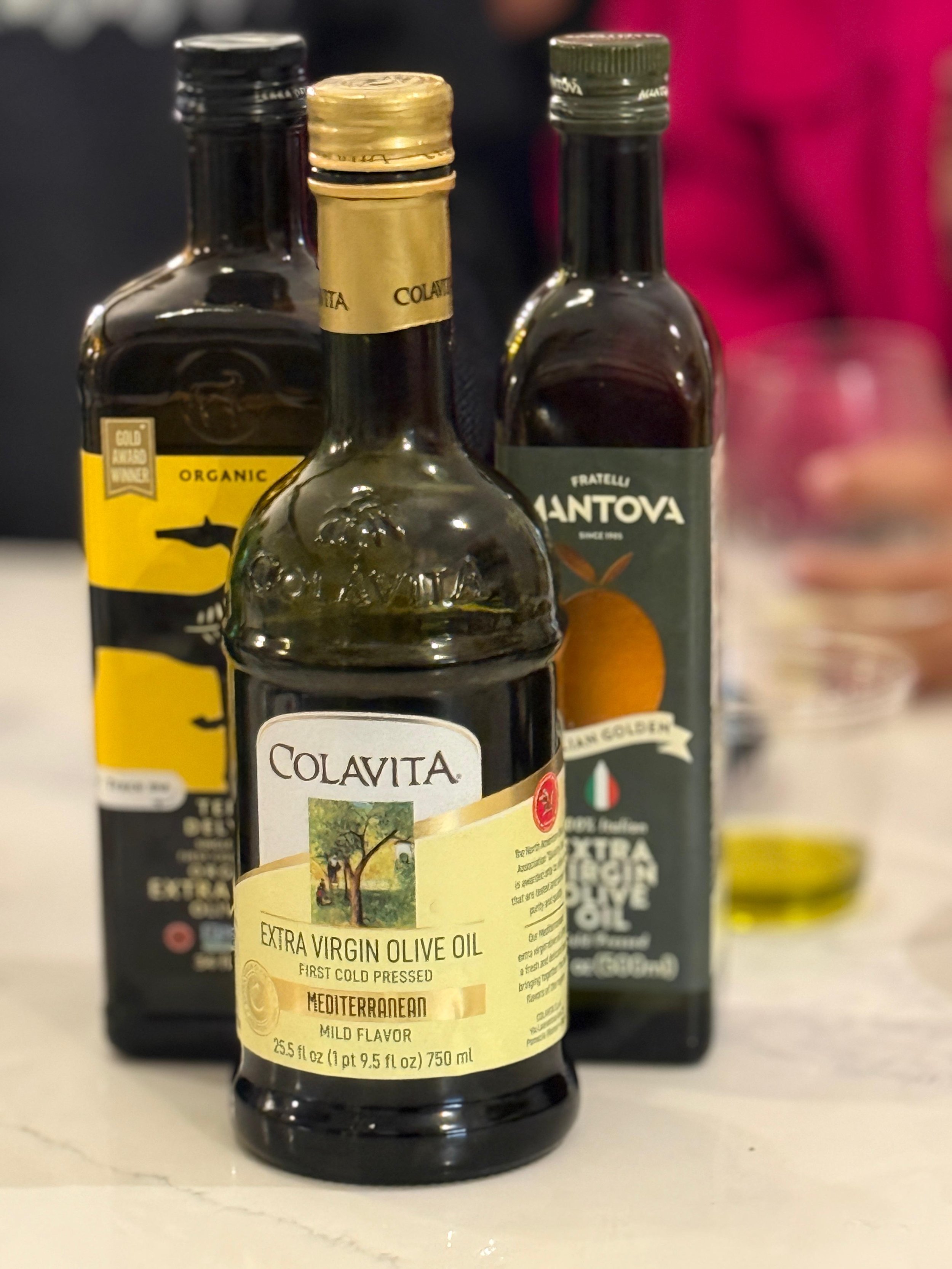
Yoga retreat olive oil tasting winners!
Colavita Extra Virgin Olive Oil – Mediterranean Blend, First Cold Pressed
Fratelli Mantova Extra Virgin Olive Oil – Italian, Cold Pressed
Terra Delyssa Organic Extra Virgin Olive Oil – Tunisian, First Cold Pressed
My personal favorite was the Colavita. I enjoy its balanced flavor and versatility, and it is readily available at many grocery stores here in Texas, including H-E-B.
Of course, taste is highly personal, so I encourage you to experiment with different oils and discover which flavors you enjoy most.
A Local Texas Favorite
If you live in Central Texas, or are planning a visit to the Austin area, I highly recommend spending an afternoon at Texas Hill Country Olive Co.
The orchard offers tours that walk visitors through the olive-growing and oil-making process while teaching how to evaluate olive oil quality. One of my favorite parts is the tasting experience, where guests can compare different olive oils and vinegars while learning what characteristics indicate freshness and quality.
Beyond being educational, it's simply a wonderful way to spend an afternoon in the Texas Hill Country. Their products can be purchased at the orchard and are also available at select local retailers throughout Texas.
Final Thoughts
Before attending that olive oil tasting, I viewed olive oil primarily as a cooking ingredient but understood it had so much potential. Today, I appreciate it as both a culinary staple and a nourishing food with a rich history and impressive health benefits.
Whether you're roasting vegetables, dressing a salad, or simply looking for ways to incorporate more anti-inflammatory foods into your meals, a quality extra virgin olive oil is one of the simplest and most versatile additions you can make to your kitchen.
Sometimes the most powerful foods are the ones we've had in our pantry all along.
