How to Shop the Outside Loop of the Grocery Story
Most grocery stores follow a similar layout. Fresh foods line the perimeter, while more processed, shelf-stable items are placed toward the center aisles. This design makes shopping efficient, but it also offers a simple strategy for building a more nutrient-dense cart: shop the outer loop first.
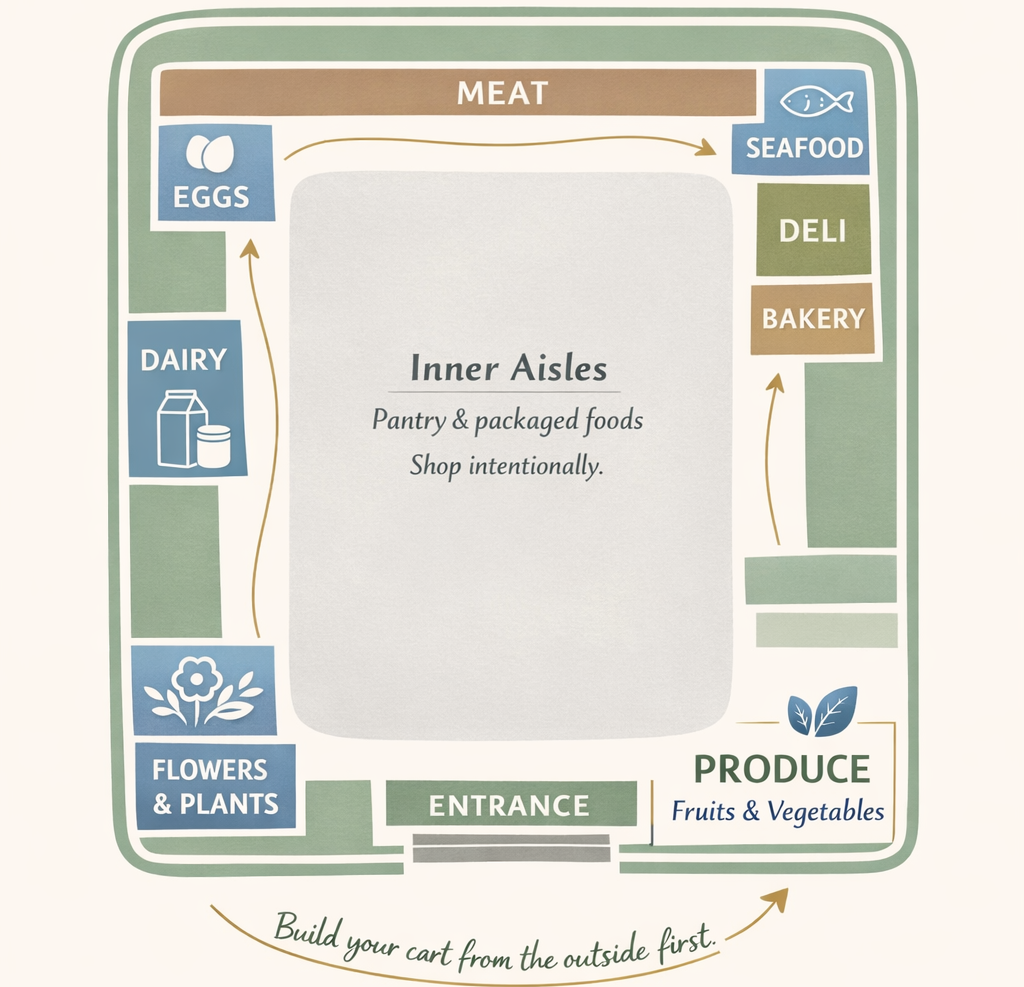
Along the outside perimeter of most grocery stores, you’ll typically find:
Produce (fruits and vegetables)
Bakery
Deli
Seafood
Meat
Eggs
Dairy
Plants and flowers
These sections tend to contain foods that are closer to their natural state and generally less processed than many products found in the center aisles. In the inner aisles, you are more likely to encounter:
Chips and crackers
Sugary cereals
Soda and sweetened beverages
Boxed cake and cookie mixes
Refined breads and tortillas
Shelf-stable soups
Ultra-processed frozen desserts
Many of these products fall into what researchers classify as ultra-processed foods, industrial formulations that often include additives, preservatives, flavor enhancers, and refined ingredients designed to increase shelf life and palatability (1).
Thoughtful Exceptions to the Rule
There are important and practical exceptions to the outside loop strategy.
Highly nutritious foods that may be located in the inner aisles include:
Frozen vegetables (without sauces)
Frozen fruits (berries, mango, pineapple, etc.)
Broths and stocks
Olive oil and vinegars
Nut butters
Whole grains (barley, brown rice, quinoa)
Legumes (lentils, chickpeas, beans)
Buckwheat and other intact grains
Bulk whole foods
Frozen produce is often flash-frozen at peak ripeness and can retain strong nutrient value (2).
When shopping inner aisles, focus on ingredient labels. A product may meet regulatory labeling standards under the U.S. Food and Drug Administration (FDA), yet still contain added sugars, sodium, and refined ingredients that are best consumed in moderation (3).
Perimeter Foods to Enjoy with Awareness
Even along the perimeter, some items benefit from moderation.
Bakery goods and deli meats and cheeses can contain:
Higher levels of sodium
Preservatives such as nitrates and nitrites
Refined flours and added sugars
Processed meats are among the leading contributors of sodium in the American diet (4). These foods can absolutely be enjoyed, but mindfully and in balance with whole foods.
Why the Outside Loop Matters
Building meals from perimeter foods prioritizes:
Whole, nutrient-dense ingredients
Naturally anti-inflammatory foods
Higher fiber intake
Antioxidants and phytonutrients
Healthy fats and quality protein
Dietary patterns rich in fruits, vegetables, whole grains, legumes, and healthy fats are associated with improved gut health and lower inflammation markers (5,6).
From an Ayurvedic perspective, whole, seasonal, minimally processed foods are believed to support digestion (agni) and overall vitality. In Ayurveda Cooking for Beginners, Laura Plumb emphasizes choosing foods close to their natural state to promote balance and ease of digestion (7).
Organic: When It Matters Most
While organic produce is ideal when accessible and affordable, it is not always necessary for every item.
The Environmental Working Group (EWG) publishes an annual Dirty Dozen and Clean Fifteen list based on pesticide residue testing data from the U.S. Department of Agriculture (USDA) and the FDA (8,9).
Dirty Dozen
(Consider purchasing organic when possible)
Apples
Blackberries
Blueberries
Potatoes
Cherries
Grapes
Nectarines
Peaches
Pears
Spinach
Kale/Collard/Mustard Greens
Strawberries
Clean Fifteen
(Lower pesticide residue, organic optional)
Asparagus
Avocados
Cabbage
Cauliflower
Kiwis
Mangos
Onions
Papayas
Pineapples
Sweet corn (fresh or frozen)
Sweet peas (frozen)
Watermelon
Bananas
Mushrooms
Carrots
These classifications reflect comparative pesticide residue levels, not the complete absence of pesticides (8,9). Regardless of organic status, washing produce thoroughly is still important.
Because these lists are updated annually, checking EWG.org/FoodNews ensures you are using the most current information (8).
A Simple Guiding Principle
When in doubt, think:
Whole. Nutrient-dense. Minimally processed.
More often than not, those foods live along the outside perimeter of your grocery store.
Shop there first. Build your meals there.
Then move inward with intention.
🌿 Mindful Morsel
Shopping the outside loop is not about restriction. It is about building a strong foundation. When you begin with whole, minimally processed foods, you naturally support balanced energy, healthy digestion, and a more anti-inflammatory way of eating.
Small, consistent choices at the grocery store can shape long-term health.
References
Monteiro CA, et al. Ultra-processed foods: what they are and how to identify them. Public Health Nutrition. 2019.
U.S. Department of Agriculture (USDA). Agricultural Research Service. Nutrient retention in frozen fruits and vegetables.
U.S. Food & Drug Administration (FDA). Food Labeling & Nutrition Guidance.
Centers for Disease Control and Prevention (CDC). Sources of Sodium in the American Diet.
Harvard T.H. Chan School of Public Health. The Nutrition Source: Inflammation and Diet.
U.S. Department of Health & Human Services & USDA. Dietary Guidelines for Americans.
Plumb, Laura. Ayurveda Cooking for Beginners: An Ayurvedic Cookbook to Balance & Heal. Rockridge Press, 2018.
Environmental Working Group (EWG). Dirty Dozen™ & Clean Fifteen™. https://www.ewg.org/foodnews/
U.S. Department of Agriculture (USDA). Pesticide Data Program Annual Summary.
