Anti-Inflammatory Fiber Foods: Why Fiber Matters & How to Use This Chart
Let’s talk about fiber — but first, what is fiber?
Fiber is a type of carbohydrate that the body cannot fully digest or absorb. While that might sound like something the body wouldn’t want, it’s actually the opposite. Fiber plays a vital role in digestion, gut health, and overall wellness, and it’s something our bodies need every single day.
Fiber comes exclusively from plant-based foods and offers a wide range of stabilizing benefits, including support for digestion, blood sugar regulation, heart health, inflammation reduction, mental well-being, and healthy body weight maintenance.¹²³
Soluble vs Insoluble Fiber: What’s the Difference?
There are two main types of dietary fiber, and both serve important but different roles in the body:
Soluble fiber dissolves in water, forming a gel-like substance in the digestive tract. This type of fiber helps lower blood glucose levels, supports cholesterol balance, and gently nourishes beneficial gut bacteria.¹⁴
Insoluble fiber does not dissolve in water. Instead, it helps move food through the digestive tract, supporting regularity and helping prevent constipation.¹
A balanced intake of both soluble and insoluble fiber is key for optimal digestive and inflammatory support.
🌿 How Fiber Supports Fullness, Digestion & Inflammation
Fiber helps promote a feeling of satiety after meals, allowing that sense of fullness to last longer between meals. This steady digestion helps regulate appetite, supports balanced energy levels, and contributes to healthy weight maintenance.²
Just as importantly, fiber plays a role in reducing inflammation throughout the body, particularly when it comes from whole, plant-based foods rich in antioxidants and phytonutrients.³⁵
How Much Fiber Do We Need?
On average, adults should aim for about 25–28 grams of fiber per day, based on a diet of roughly 1,500–2,000 calories.¹
That said, fiber needs vary depending on age, sex, body size, activity level, and overall health.
For personalized recommendations, it’s always best to consult with a physician or registered dietitian.
Fiber From Food First — Supplements as Support
Ideally, daily fiber needs should be met through whole plant foods; such as, vegetables, fruits, legumes, whole grains, nuts, and seeds.
That said, supplements can be helpful when used mindfully and intentionally. One commonly used fiber supplement is psyllium husk, which provides soluble fiber that can support digestion and regularity.¹⁶
Supplements are not meant to replace plant foods, but rather to support daily intake when needed. Many people find psyllium husk helpful when taken in the evening, after meals, allowing it to gently support digestion overnight.
Fiber, Gut Health & Mental Well-Being
A healthy daily fiber intake doesn’t just support physical digestion; it also plays a role in mental and emotional well-being.
Research continues to show strong connections between gut health and brain health, often referred to as the gut–brain axis. A diverse, fiber-rich diet supports beneficial gut bacteria, which in turn influence mood, stress response, and overall mental health.⁴⁷
📊 How to Use the Anti-Inflammatory Fiber Foods Chart
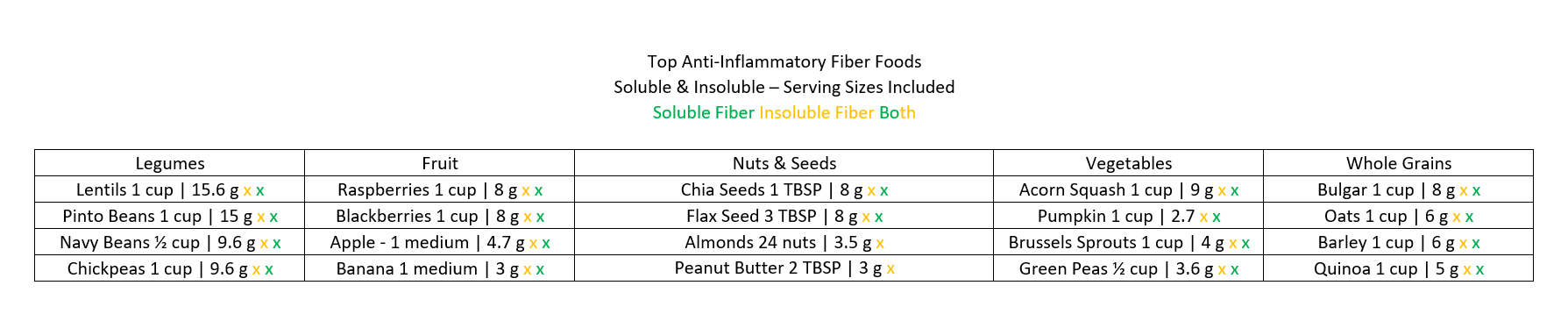
I’ve created this anti-inflammatory fiber foods chart (full break out will be provided here soon) as a practical, easy-to-use reference. It organizes foods by food group, includes serving sizes, shows fiber content, and highlights whether each food contains soluble fiber, insoluble fiber, or both.
Use this chart to:
Mix soluble and insoluble fiber throughout the day
Build balanced, gut-friendly meals
Gently increase fiber intake without overwhelm
Think of it as a guide not a checklist. Fiber works best when added gradually and consistently.
🌿 Mindful Morsel
Fiber doesn’t need to be complicated to be nourishing. Focus on variety, whole foods, and consistency, and let your meals support digestion, inflammation balance, and overall well-being. One mindful bite at a time.
References & Citations
Mayo Clinic. Dietary fiber: Essential for a healthy diet
Harvard T.H. Chan School of Public Health. Fiber
National Institutes of Health (NIH). Dietary Fiber and Inflammation
Cleveland Clinic. Gut-Brain Connection
Journal of Nutrition. Dietary Fiber and Chronic Inflammation
FDA. Dietary Supplements & Fiber
Frontiers in Psychiatry. The Microbiome–Gut–Brain Axis
